Planning Your Visit to Krantzkloof Trails
Best Time to Hike the Trails
The reserve’s forty kilometres of trails see a fraction of the footfall that Umhlanga’s beaches attract on any given Sunday. That quiet is what draws me back. Timing, though, shapes the experience more than distance does. The krantzkloof nature reserve trails are sublime in late autumn, when the humidity breaks and the forest floor turns amber. February can be brutal, with afternoon thunderheads boiling over the gorge, but the waterfalls become monstrous after a storm. Winter mornings carry a real chill, and the southern cliffs stay dark until nearly nine o’clock.
I have learned to start early without exception. An eight o’clock departure in July means you reach the Nkutu viewpoint just as the light catches the far wall. The Molweni River below, exposed and purposeful, reminds me that these krantzkloof nature reserve trails are older than any map or municipal sign.
Permit Requirements and Park Fees
Getting into the reserve is straightforward, but you must know the system. Entry to the krantzkloof nature reserve trails is managed through the eThekwini Municipality. You will need to book your slot in advance via their online portal, or you can pay at the gate if capacity allows. The booking process is simple, but it does require your ID number and vehicle registration. I have found that midweek bookings are rarely an issue, while weekend slots fill up quickly.
The park fees are minimal, especially compared to private game reserves. At the time of writing, day visitors pay around R45 per adult, with a small fee for vehicles. There is a separate tariff for the krantzkloof nature reserve trails if you plan to hike the longer routes. Standard entry covers the picnic sites and the main overlooks, but some of the more remote trailheads access is included. Always carry cash, as the card machines at the gate have a reputation for failing. Here is the payment breakdown:
– Day visitor fee: R45 per adult
– Child fee (under 12): R20
– Vehicle entry: R15
– Annual permit: R350 per person
The gate staff will issue you a permit that you must display on your dashboard. You will also receive a trail map, though the markings on the ground are quite clear once you get going. The reserve enforces a strict no-litter policy and all waste must be carried out. This simple rule keeps the krantzkloof nature reserve trails pristine, a courtesy that local hikers appreciate and respect. The permits are checked by roving rangers, so keep yours handy.
Getting to the Reserve and Parking
On a Sunday morning, the Krantzkloof nature reserve trails feel a world away from the city’s hum, but getting there takes more than good intentions. I discovered this when I stood at the gate while staff waved me toward a parking lot already full.
From Durban, take the N3 north to the M13 Kloof exit. The signed entrance lies ahead on Old Kloof Road; the stone pillars mark the boundary. The last tar gives way to gravel, which summer storms carve into ridges. Ordinary cars manage when dry, though higher clearance eases the ride.
Parking is organised in two clusters, each serving different parts of the Krantzkloof nature reserve trails. The first, near the gate, suits picnickers. The second, a kilometer onward, leads to longer routes. On weekends, both fill by nine, so latecomers wait for another vehicle to depart.
What to Bring on Your Hike
A ranger once told me that most rescue calls on the krantzkloof nature reserve trails come from people wearing flip-flops. That stuck with me. Planning your visit means respecting the terrain and the clock. The krantzkloof nature reserve trails demand more than a phone battery and good intentions. The gorge’s humidity, the afternoon heat, and the slick clay underfoot all shape your hike. I pack differently here than anywhere else.
Carry these basics on your hike:
- Two litres of water per person, minimum
- Closed-toe shoes with real grip
- Lightweight rain jacket, even in winter
The trailheads have no shops, and the forest canopy hides the sky. That matters when you are three kilometres from your car.
The Main Hiking Trails You Can’t Miss
The Gorge Trail: A Scenic Descent
The Gorge Trail is the reserve’s showstopper. It drops 400 meters over a punishing 2.5 kilometers, and krantzkloof nature reserve trails don’t get any more dramatic than this. I’ve done this hike three times, and each descent reveals something new. The path switchbacks through coastal forest, then opens onto exposed cliffs where the wind hits hard. Follow the sound of water; the Nkutu River appears below you, a green ribbon in the gorge. Key sights along the way:
- Mbokodwebomvu Falls, a thin plume over ancient rock
- A massive yellowwood stand that smells of damp earth
- Rock pools near the river bend, clear and cold
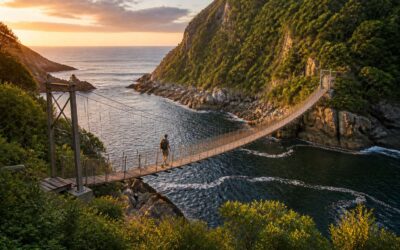
The return climb is a grind, no way around it. Your quads will ache by the last switchback. The final stretch crosses a wooden bridge above a churning pool. Take a moment there! The gorge’s scale hits you all at once, and you’ll understand why this trail stays etched in memory.
The Cliff Path: Panoramic Views
The Cliff Path offers a different kind of thrill. While the gorge floor pulls you down into its verdant embrace, this route lifts you above it all. The RDP sign at the trailhead reads a modest 4.5 kilometers, but the altitude gain is where the work lies. I started before the morning mist had fully burned off the canopy, and the view shifted with every step.
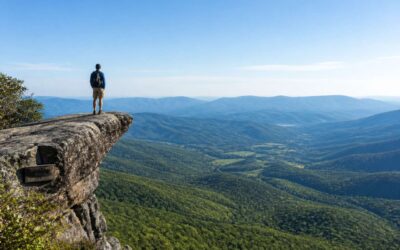
The path follows the western rim, where the earth falls away sharply. You are standing on a precipice, and the wind here does not whisper; it shouts. Below, the Molweni River carves through the sandstone, a persistent force. The opposite cliff face shows its age in ochre and grey strata.
From this height, the krantzkloof nature reserve trails reveal their full architecture. Look for these landmarks along the rim:
– The distinctively flat-topped summit of Krantzkloof Peak
– The deep shadow of the Nkutu River confluence below
– The distant glint of the dam wall at the reserve’s southern boundary
The true beauty of this route is the silence. Fewer hikers make the climb, so you often have the escarpment to yourself. It is a place to contemplate the slow, violent history of the land. The path is rocky in sections, requiring attention, but the payoff is a perspective that the gorge cannot offer. You see the trail network as a whole, a system of lines scratched into a living landscape. This is the route for those who prefer their views with a side of vertigo and their thoughts uninterrupted.
The Fig Tree Forest Walk
The Fig Tree Forest Walk starts near the main parking area, a route that does not demand the stamina of the deeper trails. It is a short loop, yet it holds some of the oldest trees in the reserve. The giant strangler figs dominate the canopy, their roots wrapping around the sandstone like slow fingers. Light filters through in patches, making the leaf litter glow. You will share the path with birdcall and the rustle of small mammals. The krantzkloof nature reserve trails here feel intimate, a reminder that not every hike must be a battle. It is a good choice for families or for anyone who wants a quiet hour before a bigger expedition.
The River Trail Loop
A day after heavy rain, the river turns the colour of strong rooibos tea, and the falls become a roar you feel in your chest. The River Trail Loop is the reserve’s middle ground. It asks for a reasonable level of fitness, but it rewards you with constant water views. The path drops down the gorge side, passing through layers of moist forest where the air cools immediately.
This route links directly to the river bank, where swimmers test the current in the deeper rock pools. The trail requires careful footwork over exposed roots and wet boulders. The krantzkloof nature reserve trails are known for their variety, and this loop delivers distance without the full commitment of the Gorge Trail.
Along the way, you should watch for:
The climb back up is steady, a burn in the calves that justifies the picnic at the top. It is a fulfilling, honest hike that stays with you long after the engine cools in the parking lot.
The Waterfall Route
The Waterfall Route cuts straight to the spectacle. Where other paths meander through forest or trace the cliff edge, this trail makes a determined descent toward the source of the Nkutu River’s thunder. It is the shortest way to feel the spray on your face, and for many visitors, it is the heart of the krantzkloof nature reserve trails.
The path is steep and unrelenting, a series of stone steps that seem to multiply as you go. Your legs will feel the strain, but the reward arrives as a physical sensation.
– The main falls plunging into a dark, restless pool
– The constant mist that clings to the air and your skin
– The deep, echoing roar that muffles all other sound
– The cool, shadowed amphitheatre formed by the gorge walls
The return journey is a lung-burning climb. As I paused to catch my breath on a rocky ledge, a lourie called out from the canopy, its voice carrying across the ravine. The view from below is transformative. You understand the raw power of water in a way that no photograph can capture. This route is an essential piece of the krantzkloof nature reserve trails experience, a visceral encounter with the force that shaped this landscape.
The Community Trail
Of the many krantzkloof nature reserve trails, the Community Trail holds a singular distinction: it is the one path where you are likely to hear the reserve before you see its depths. This route offers a different cadence than the strenuous descents to the gorge floor. It winds along the upper plateau, a gentler proposition that rewards those who prefer contemplation over exertion. The trail is a conduit between the everyday world and the wilderness, a threshold where the noise of traffic fades into the rustle of leaves and the distant hum of cicadas. It is a favourite for families and those seeking a less demanding encounter with the reserve’s biodiversity.
The path’s appeal lies in its accessibility. It offers a practical and satisfying route for a morning constitutional or an afternoon of quiet observation.
– The forest edge, where birdlife is particularly active during the early hours
– The open grassland sections, which provide a stark and beautiful contrast to the dense riverine woods
– Several discreet benches positioned to take advantage of the sightlines
Walking this trail is an exercise in perspective. It allows you to see the progression of the landscape, from the manicured fringes to the untamed ravines. You begin to piece together the geography of the area, understanding how the various krantzkloof nature reserve trails connect and diverge. It is a foundational experience, one that gives context to the more dramatic routes you may tackle on subsequent visits.
Trail Difficulty and Preparation Guide
Trail Grading and Distances
Some trails here humble you with steepness. Others test your endurance through repetition. The krantzkloof nature reserve trails are graded using the Western Cape system, which means distances alone never tell the full story. A short route can still demand several hours of scrambling over exposed rock.
The Gorge Trail measures roughly 3.5 kilometers to the viewing deck, but the descent is relentless. Elevation loss approaches 300 meters, and what goes down must come back up. This is a Grade 3 hike, requiring moderate fitness and sturdy footwear. The Fig Tree Forest Walk, by contrast, is a gentle Grade 1 stroll suitable for families, covering about 2 kilometers on well-defined paths.
– Gorge Trail: 3.5 km, Grade 3, steep switchbacks
– Cliff Path: 4 km, Grade 2, undulating ridge line
– River Trail Loop: 6 km, Grade 3, mixed terrain
– Waterfall Route: 8 km return, Grade 4, requires confidence
Preparation involves checking trail conditions after rainfall. Wet sandstone becomes treacherous, and river crossings on the lower paths can surge without warning. Carry at least 2 liters of water per person, because the humidity sits heavy in the gorge year round. The krantzkloof nature reserve trails reward those who respect their contradictions: short yet demanding, accessible yet wild. Your legs will argue with the map, and that is the point.
Essential Gear and Footwear
Grading tells you length, not how a trail feels underfoot. The krantzkloof nature reserve trails punish careless footwear choices. Wet sandstone turns slick within minutes of rain, and the gorge’s humidity means sweat burns your eyes before the first switchback. Hiking shoes with deep lugs and sticky rubber, such as Vibram Megagrip, grip damp rock. Trail runners work for light packers, but they sacrifice ankle support on rocky descents.
For the Waterfall Route’s Grade 4 scrambling, pack:
- A collapsible trekking pole for river crossings
- Fingerless gloves to protect palms on sandstone
- A small dry bag for your phone
Wear moisture-wicking clothes. Cotton stays wet, chafes, and offers little insulation when the gorge shade arrives. The krantzkloof nature reserve trails turn more technical after rain. A trail that felt moderate becomes tricky underfoot. Proper footwear and preparation keep minor discomforts from becoming trip-ending problems.
Fitness and Hydration Tips
The climb back out of the gorge is the real test. A hiker might fly down the krantzkloof nature reserve trails in under an hour, only to spend two hours struggling back up. The elevation gain is relentless, and the humidity thickens as the day warms. For every 300 meters of descent, expect to double that effort on the return. This is where fitness matters more than fancy gear.
Most people underestimate the cardiovascular load of these paths. The Waterfall Route, for example, demands repeated bouts of elevated heart rate, not just steady walking. Your legs need to handle explosive moves over boulders, while your lungs cope with the heavy air near the river. A basic level of aerobic fitness, the kind you get from regular jogging or cycling, makes the experience far more enjoyable.
Hydration is a silent problem on the krantzkloof nature reserve trails. The forest canopy blocks the sun, keeping hikers cool and unaware they are sweating. By the time you feel thirsty, you are already mildly dehydrated, which affects balance and decision making on the scrambles. Carry at least two liters of water per person for a half day hike, more if you plan to linger at the pools. The tap water at the reserve is safe, but there is no refill point inside the gorge itself.
A practical approach to pacing: stop for five minutes every half hour, drink water, and check your heart rate. If you are breathing too hard to speak comfortably, slow down. The trails are not a race, and the rangers regularly assist hikers who pushed too hard early on. Heat exhaustion symptoms include nausea and dizziness, and they arrive quickly in this enclosed valley.
Navigating the Trails With a Map
Reading the krantzkloof nature reserve trails map before you start saves you from a very sweaty conversation with a ranger later. The paths branch without warning, and a few junctions look identical once you are down in the gorge. I made that mistake once. The map shows contour lines that reveal the brutal climbs, plus the water crossings that turn slippery after rain.
Check three things before you descend:
– The distance between your entry point and the river
– The elevation profile for the return leg
– The marked escape routes that lead back to the car park
The difficulty of the krantzkloof nature reserve trails shifts with the weather. A dry path that seems easy on paper becomes a mud slide after a storm. Give yourself an extra hour and keep the map on hand.
Guided Hikes vs Self-Directed
Most hikers overestimate their route finding abilities by a solid 40 percent, which explains why self directed scrambles often end with someone waving at a rescue helicopter. The krantzkloof nature reserve trails work either way, but the choice changes your experience. Guided hikes hand you the rare benefits of a ranger’s eyes for wildlife and a running commentary on local geology, plus they remove the cognitive load of staring at the map. Self directed means you answer only to your own pace, which is slower than you think, and to your own mistakes.
Before picking, ask yourself a few hard questions:
1. Can you tell a dry riverbed from a path that vanished last season?
2. Do you actually enjoy stopping to check a compass every 20 minutes?
3. Is your phone battery reliable or always at 12 percent?
Guided tours forgive poor planning. Solo trips forgive nobody. The krantzkloof nature reserve trails have a way of turning the proud into the humble, so choose your poison wisely.
Wildlife and Scenic Highlights Along the Trails
Birdwatching Hotspots
The krantzkloof nature reserve trails drop sharply into a sandstone gorge where forest birds crowd the canopy. The call of the Narina Trogon, a deep, mellow hoot, is the moment most birdwatchers wait for. The reserve sits on the KwaZulu-Natal mistbelt, giving it a dense mix of endemic and migratory species.
Scenic highlights shift with elevation. At the cliff tops, grassland views stretch across the Molweni Gorge. Down at the river pools, the forest closes in overhead and the water mirrors the leaves. Each turn offers a different perspective of the gorge walls.
Common sightings along the trails:
– Narina Trogon
– Crowned Eagle
– Olive Woodpecker
– Knysna Turaco
For the clearest bird calls, hike these krantzkloof nature reserve trails in the first hours of daylight.
Indigenous Flora and Fauna
The krantzkloof nature reserve trails wind through one of KwaZulu-Natal’s most botanically rich mistbelt gorges. Ancient yellowwood trees, older than the colonial settlement, share the slopes with wild pomegranate and forest ferns. In spring, the grasslands erupt with red-hot pokers and orchids that draw sunbirds.
Beyond the birds, the krantzkloof nature reserve trails reveal a busy mammal population. Bushbuck move quietly through the understorey. Rock hyrax sun themselves on exposed sandstone ledges, while samango monkeys, a threatened species, travel in family troops through the canopy.
- Yellowwood (Podocarpus)
- Wild pomegranate
- Bushbuck and duiker
- Samango monkey troops
- Rock hyrax on the cliffs
I keep returning to the Molweni River. Otters patrol the pools. Freshwater crabs scuttle beneath submerged rocks. Each encounter, from an orchid to a hyrax’s alarm call, reminds you that this gorge sustains something older and more intricate than the city behind you.
The Best Photographic Viewpoints
Photographers should arrive before the morning mist burns off. The krantzkloof nature reserve trails offer viewpoints where the gorge catches first light, and the Molweni River turns silver below the cliffs. Upper sections reveal the full sandstone amphitheatre, while the waterfall viewpoint rewards those who wait for the breeze to clear the spray.
- The waterfall viewpoint after summer rain
- The cliff path in late afternoon
- The river bend where the gorge narrows
Otters surface in the pools. Samango monkeys move through the fig trees, and the light shifts constantly. A telephoto lens will isolate the forest ferns and wild pomegranate in sharp detail. Wide angles work best from the cliff path, where the gorge curves southward into shadow.
Seasonal Changes and Waterfalls
Winter transforms the krantzkloof nature reserve trails into quieter passages. The Molweni River drops, exposing sun-warmed rocks where otters rest. Samango monkeys move higher into the canopy, and the absence of summer crowds makes sightings easier.
Spring and autumn bring their own rhythms. After heavy rain, the waterfalls swell into roaring curtains, casting rainbows over the cliffs. By late summer, the gorge walls glow with moss and ferns, while the river pools hold the shifting sky.
Tips for a Safe and Enjoyable Hike
Weather Awareness and Safety Rules
A sudden KwaZulu-Natal thunderstorm can turn a sunlit path into a slick, treacherous surface within minutes. The escarpment creates a microclimate, so conditions from the car park rarely match those below the canopy. When hiking the krantzkloof nature reserve trails, treat forecasts as provisional. Check radar before descending, but also watch for cumulus clouds building by noon or a shift in wind. If thunder sounds, leave the riverbed at once. Lightning prefers high points and open water.
- Extra batteries
- An emergency blanket
- A phone with the reserve number saved
Carry a whistle and headlamp even on short walks. Keep these in a waterproof pouch. Stay on the marked krantzkloof nature reserve trails. The gap between a routinized path and loose shale is a single misstep. When the afternoon breeze turns cold, turn back.
What to Do in Case of Emergency
The reserve is beautiful, but it does not care about your schedule. The krantzkloof nature reserve trails demand respect for their moods. Panic is a physical state. Adrenaline makes your heart pound and your thinking narrow. That feeling is a signal to stop, not to run.
Your first emergency step is always to control your breathing. Kneel if you must, and take stock. Do not rely on a phone signal, because it is unreliable in the gorge. Retrace your visual markers, not your emotional ones.
If the choice is between a longer route and a risky scramble, take the longer route. The rocks here are known for their deceptive grip.
When something does go wrong, and it will for someone eventually, the protocol is simple to read and harder to execute:
1. Stay put if you are lost. Moving deepens the search radius.
2. Use your whistle in bursts of three. That is the universal call.
3. Make yourself visible on a high point, but avoid sheer edges.
4. Conserve your phone battery by sending a text, not a call.
Remember that the gorge hides sound. A shout from a hiker a hundred meters away can sound impossibly distant. The famous echo of the falls can mask the approach of other people. You are more alone than you think until you are not. The trails test your patience in silence, and they reward decisiveness. The mamba that slips into the undergrowth is a reminder to be alert, not paranoid. Filming every step through a screen is the fastest way to lose your footing. Put the phone down when the path narrows.
If you must move an injured person, do it slowly. The gradient will do more damage than the original fall if you rush. The krantzkloof nature reserve trails will always be there tomorrow. Your responsibility is to make sure you are there tomorrow, too.
Leave No Trace Principles
The krantzkloof nature reserve trails reveal their secrets only to those who walk with intention. I have learned that the safest way to enjoy this gorge is to respect its changing conditions. Each step on the sandstone sends a vibration through your boots. Pause at every junction. Let the waterfall guide your pace, not your watch.
Leave no trace is simple here. Carry every wrapper, every bottle cap, every orange peel. The reserve has no bin for a reason. Tread on the established path, even when a shortcut looks tempting. The fragile moss takes decades to recover.
- Stop for passing hikers on narrow sections.
- Keep your group close enough to hear a whistle.
- Never feed the monkeys or the samango.
Your enjoyment depends on your restraint. The krantzkloof nature reserve trails will offer a moment of quiet, earned through careful footsteps and empty hands.
Accessibility and Family-Friendly Options
Safety on the krantzkloof nature reserve trails starts with honest self-assessment. I have watched hikers underestimate the humidity and run out of energy halfway up. This reserve does not forgive rushing. For families, the Fig Tree Forest Walk offers shorter distances and shaded paths, though the Gorge Trail’s steep descents require able knees and sturdy boots.
Accessibility is limited. Wheelchair users can enjoy the picnic area but not the trail network itself. Parents with toddlers should choose a backpack carrier, as strollers will not survive these sandstone stairs. Carrying two litres of water per person is a sensible baseline, and agreeing on a turn-back time prevents pressure.
These trails reward slow observers. Let kids set the pace and pause at every vantage point. That is the real family-friendly secret here!

0 Comments