Understanding the Route
Geography of the Champagne Region
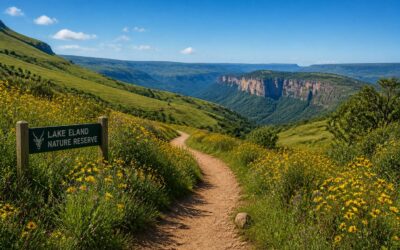
The champagne castle trail begins where the valley floor still holds the morning damp, roughly 1,400 metres above sea level. From the car park you walk south beside the Ntonjelana river, then bend east once the gorge narrows. This is the standard start for most parties, and the path makes sense when you see the amphitheatre walls rising ahead.
- The lower stretch follows water, so expect wet boots in summer.
- The Contour Path cuts across the slope at a steady angle.
- The final climb reaches the escarpment edge near Keith’s Bush camp.
This sequence matters because each segment brings different exposure. The river section stays shaded and humid; the contour path meets open wind; the summit push turns steep and rocky. That is the geography of the champagne castle trail in practical terms. Read the terrain before you move, and you will know where the next rest point sits.
History Behind the Castles
The champagne castle trail carries a history that predates maps. San herders painted ochre figures on boulders near the river, and those marks remain visible on the lower slopes if you slow down to find them! In 1880, a British survey team named the main peak after the sparkling wine they opened to mark their work, a nod that stuck to the entire escarpment.
The castles along this route are not stone forts but basalt pillars shaped by ancient ice and runoff. Shepherds followed these slopes for generations, and their footpaths formed the foundation of today’s track. By the 1930s, climbers had added the chain ladders and cut steps that hikers now rely on.
- San rock art near the river crossing dates back over 2,000 years.
- The 1880 survey cairn still stands above the Contour Path.
- The first recorded ascent of the Champagne Castle peak happened in 1935.
How the Trail Connects Vineyards to Fortresses
On the champagne castle trail, you start where the last vineyard rows give way to open grassland. You leave the trellises and the scent of ripening grapes behind, following a footpath worn smooth by generations of farmers and herders. Within an hour, the gradient changes. The gentle slope becomes a steady climb, and the fortress walls of basalt loom closer. The route is simple to follow in daylight, thanks to painted footprints on rocks. But the real navigation happens with your legs:
- First, cross the river via the chain bridge.
- Next, traverse the Contour Path until you reach the second gully.
- Finally, take the cut steps up to the summit plateau.
Each step carries you further from the cultivated lowlands and deeper into the stony embrace of the peaks. That is the connection the champagne castle trail offers, a slow passage from human order into geological time.
Planning Your Castle Tour
Choosing the Right Season
Season dictates everything on the champagne castle trail. Temperature swings of 15 degrees between morning and noon are common, and afternoon storms roll in without warning. I have hiked this route in all four seasons, and each one demands a different approach!
For a three day expedition, plan for:
- Booking overnight huts at Cathedral Peak at least two months in advance, especially for weekends
- Starting daily hikes by 6am to complete the ascents before the heat settles
- Packing microspikes for winter mornings when frost lingers on the summit
Summer runs are lush but slippery. Spring offers the widest variety of wildflowers. Winter, meanwhile, provides the clearest views of the surrounding peaks. The champagne castle trail itself never changes, but your experience of it will shift completely based on the month you choose.
Transportation Options
Nearly every castle on the high route suffers from the same affliction: parking scarcity. Your champagne castle trail adventure begins with deciding how to reach the trailheads without exhausting your patience. The rental car remains the most sensible choice for independent travelers. It grants freedom to pause at viewpoints the shuttle drivers ignore. Alternatively, the organized shuttle services depart daily from the larger towns. They keep a strict timetable, which suits hikers who prefer certainty over spontaneity.
- Self-drive using a high-clearance vehicle for the gravel passes.
- Join a shared shuttle from the central booking office.
- Combine both, parking at the lower gate and riding up.
For the champagne castle trail itself, each option changes your morning start time. The shuttle drops you at the main entrance by seven. Driving permits a later departure but demands earlier parking. Choose based on your tolerance for negotiation with local guides.
Duration and Pace
Most travelers underestimate the champagne castle trail’s true length. The forty kilometer route demands at least three days for a comfortable pace, yet many finish in two if they start before sunrise. Your legs will thank you for the slower option.
Consider your fitness honestly. The trail climbs from valley floor to vineyard terraces, then into fortress ramparts. Steep sections add an hour per day. I recommend measuring time in hours, not kilometers. A six hour day feels vastly different from an eight hour day. Local guides often suggest splitting the main climb across two mornings.
- Two days suits experienced hikers who move fast
- Three days allows for picnics and detours
- Four days embraces every viewpoint
Pacing matters more than distance. The champagne castle trail rewards those who pause, so build in a rest day near midpoint. That rest day lets you explore the smaller chapels without rushing.
Where to Stay
One night in a converted wine press could change how you see the entire champagne castle trail. I have walked this route three times, and each night’s shelter determined the next day’s mood. Stay in Épernay for easy train access, but the smaller hamlets offer more. Guest rooms above family-run cafés provide a mattress that smells of apple wood smoke and a breakfast of fresh bread from the village oven.
Walkers often ask which side to start from. My answer: pick your lodging before you pick your direction. If you stay east of the trail’s midpoint, you can explore the fortress ramparts at dawn. If you stay west, you end your days among the valley’s quietest vineyards.
Consider these practical lodging choices:
- Chambres d’hôtes in Cumières, only six rooms, courtyard full of hikers
- Converted wine presses near Mareuil, thick walls keep afternoon heat away
Book your champagne castle trail stays at least a month ahead in summer. Village inns rarely have more than a dozen beds, and they fill fast.
Must-Visit Châteaux and Estates
Impressive Medieval Castles
Forty castles. One winding route. The champagne castle trail strings these fortresses together, and the finest estates reward visitors with more than weathered walls.
Château de Boursault commands its ridge with Renaissance grace, its façade glowing amber at dusk. At Château de Montmort, I found the ramparts opening onto vineyard rows descending the slope. The cellars beneath Château de Mareuil sur Ay burrow into chalk that once formed the seafloor.
Prioritise these on your itinerary!
- Château de Bligny, surmounted by a 12th century keep that has never fallen
- Château de Condé, a moated stronghold enveloped by working vines
- Château de Sacy, whose towers frame a perfect view of the Marne valley
Each estate delivers a distinct flavour of medieval France, yet all share a geological foundation in the same chalky soil.
Renowned Champagne Houses
Most travellers follow the champagne castle trail for ramparts and keeps, yet the cellars beneath these manors remain equally compelling. Château de Sacy doubles as a working estate, pouring its own cuvées beside the moat. Château de Bligny still farms roughly 40 hectares of Pinot Noir and Meunier on its own slope. At Château de Condé, the surrounding vineyards crowd the moat’s edge.
Recommended growers to visit along the same stretch:
- Champagne Vilmart in Rilly la Montagne ages its cuvées in large oak barrels.
- Ulysse Collin in Congy crafts pure Chardonnay from old vines.
- Roger Coulon in Cuchery farms steep slopes with old Pinot Noir.
Each producer lets you taste the chalk lying under both vines and castle foundations. You pair the fortified architecture with a direct sense of the terroir. The champagne castle trail connects that history to each glass you drink.
Hidden Gem Estates
The champagne castle trail loves a good moat, but the actual benefit is in the owners who refuse to leave. Château de Mareuil sur Ay keeps its drawbridge up and its tasting room open, serving a Pinot Noir with a boldness that outpaces the architecture. At Château de Pierry, the owners let you walk the battlements with a glass in hand, a dangerous liberty we should all support.
Hidden gem estates sit just beyond the tourist maps, and they deserve your detour.
- Champagne Gonet in Bisseuil offers a walled garden with vines older than the château’s parrot.
- Champagne Duval in Oger pours an extra brut that could clean a portcullis.
Each stop on the champagne castle trail becomes a direct taste of the soil under the stone.
Vineyard Views and Picnic Spots
Casting a picnic blanket on the champagne castle trail is a social art, and the estates understand this better than any guidebook. Château de Montmort offers a sloping lawn where the vines descend to the picnic tables, a view that encourages debates about terroir.
At Château de Bligny, the terraced garden above the press house provides a vantage point over the Marne, but the real prize is the bench near the old well. You can collect a basket of local cheese and charcuterie at the reception, then claim a spot under the chestnut trees.
For a more mannered affair, the courtyard at Château de Condé opens onto gravel paths and benches that face the river. The modest garden at Champagne Brocot hides a single picnic table within the vines. That table is the trail’s quiet secret, and those who find it keep their voices down.
Architectural Highlights
No two châteaux on the champagne castle trail share the same roofline. At Château de Boursault, the neo Gothic facade shows how owners rebuilt after 1843, using English manor details such as ornate dormers and a steep slate roof. Inside, the grand salon retains a herringbone parquet floor.
The medieval keep at Château de Mareuil surprises visitors with its chalk stone walls and narrow spiral stairway. I found the masons’ marks from the 1100s still visible under the vaulted chapel.
These architectural details:
- The porte cochère at Château de Leuvrigny frames the courtyard.
- The painted ribs in the chapel at Château de Rilly survive intact.
- The cast iron staircase at Château de Vandières twists up three floors.
Each element offers a distinct reason to pause along the champagne castle trail!
Experiencing the Local Culture
Champagne Tasting Etiquette
On the champagne castle trail, I learned that tasting etiquette is less about rules and more about presence. Nothing humbles you like watching a vigneron assess his own vintage. Tastings become conversations, not transactions. Presence, it turns out, changes everything!
- Maintain eye contact while the glass is filled.
- Say “santé” before your first sip.
- Never rush the taste; hold it for a second on your tongue.
Locals expect curiosity, not applause. Ask about the soil, the weather, or the family history. Each answer deepens your understanding of the route. Some cellars place a communal bucket on the table. Using it signals respect, not waste. Others pause mid-pour to let you smell the empty glass. These small gestures define the culture above any rulebook.
Regional Cuisine Pairings
The local vigneron poured a Blanc de Noirs and pointed to a plate of boudin blanc. “Taste the soil,” he said. On the champagne castle trail, cuisine is not a side dish. It is the map that explains every slope and limestone fracture.
Each estate offers its own ritual. At a family-run farmhouse near Épernay, I learned that chaource cheese softens the sharpness of a brut nature, while a salt-crusted ham calls for a reserve cuvée. These pairings emerge from centuries of surviving harsh winters and thin harvests.
- Boudin blanc with a Pinot Meunier dominant blend
- Chaource cheese with an extra brut
- Eggs poached in Meaux mustard with a blanc de blancs
The champenois do not fuss over formal matches. They build meals from pantry scraps and cellar leftovers. That humility defines the champagne castle trail more than any tour brochure.
Festivals and Harvest Events
September brings the vendange, and the champagne castle trail fills with pickers, tractors, and ripe Chardonnay. I joined a morning harvest in Vertus, where crates moved hand to hand before sunrise. By noon, the village square smelled of crushed grapes and wood smoke. The Fête de la Saint-Vincent follows, honoring the patron saint of winemakers. Locals carry carved statues through medieval streets while cellars open for impromptu tastings.
Festival dates worth planning around:
– La Fête du Champagne in Épernay, a weekend of parades
– The Côte des Bar wine fair, where growers pour rare vintages
– Long-table harvest banquets in Bergères-lès-Vertus
These gatherings reveal the communal heart of the champagne castle trail. The fortresses stand above the celebrations, but the villages carry the culture forward.
Meeting the Winemakers
Meeting winemakers along the champagne castle trail requires an elastic schedule and tolerance for wet gravel. The growers I met in Vertus and Cramant rarely gave speeches. They stood in doorways with pruning shears and asked who I knew in the village. Once I answered, the conversation turned to the 1976 frost, the neighbor’s faulty press, and the price of bottles at auction.
Their cellars are not showrooms. They are cold, dark rooms stacked with dusty library vintages. A winemaker pours from an unlabeled bottle and waits for your reaction. That silence is the local culture in its purest form.
Things I learned, unsolicited:
- The best conversations happen at the sorting table during harvest
- Asking about the weather is a rite of passage
- Never compliment the label. Compliment the chalk.
These exchanges form the actual map of the champagne castle trail. The fortresses bring the crowds. The winemakers decide who stays for dinner.
Shopping for Souvenirs
Souvenir hunting along the champagne castle trail rarely begins in a gift shop. It starts at a village market in Vertus, where a farmer sells honey from hives placed at the edge of a vineyard. The label is handwritten. The taste carries the chalk of the soil. That is the souvenir worth carrying home.
In Cramant, a cooper sells miniature oak barrels used for aging. He will sign the underside with a date and the vineyard name. Local bookshops stock maps of the champagne castle trail, annotated with cellar doors that never appear in guidebooks. These objects carry the place with them.
- Hand-painted vineyard markers from Épernay
- Small-batch mustard made with champagne vinegar
- Reusable linen bags stamped with castle crests
Prices vary wildly. A bottle of grower champagne costs less than a branded t-shirt in a tourist kiosk. Choose the bottle. The champagne castle trail rewards those who shop where the locals do.
Capturing Memorable Moments
The champagne castle trail hands you moments that refuse to be photographed properly. You will stand in a village square at dusk, watching a retired cooper argue with his neighbour about the correct way to prune a vine. Your phone will produce a blurry rectangle. That blur is the memory.
Locals along the champagne castle trail have perfected the art of being unbothered by visitors. A woman in Avize might wave you over to taste a wine she has not bothered to label. She will shrug when you praise it. Perfection, apparently, is routine.
Capture what you can:
- The sound of church bells echoing across a frost-covered slope at sunrise
- A cellar master’s deadpan expression when you ask if he ever gets bored
- The specific silence inside a medieval tower that has not heard noise in centuries
These moments do not fit in a suitcase. They sit in your mind for years.
Practical Tips and Tricks
Budgeting and Costs
Planning a budget for the champagne castle trail requires more foresight than you might expect. Entrance fees at the major fortresses alone can consume a third of your daily allowance, while tasting flights at the renowned houses add up quickly. I found that setting a fixed daily cap, around 60 euros per person, keeps the experience enjoyable without financial strain.
The smartest way to stretch your rand is to prioritise. Choose one flagship champagne house for a grand tasting, then stick to smaller growers for the rest.
- Pack a refillable water bottle, as vineyard taps are free.
- Share tasting flights between two people.
- Buy picnic supplies from local markets instead of estate cafes.
These small choices keep the focus on the experience itself rather than the mounting costs.
Navigating Without a Car
Traveling the champagne castle trail without a car calls for a slower rhythm, and that is a gift. I leaned on the local TER train between towns, then switched to the tourist shuttle that winds through the valley. It worked, but only because I threw away my assumption that flexibility would come free.
One hard truth: timetables shift with the seasons, so check the day before. I also stashed my backpack at the Reims tourist office, which saved me from dragging luggage up castle stairs.
To keep the day from unravelling:
- Book the first shuttle ride of the morning, when crowds are thin.
- Carry offline maps, because vineyard lanes swallow signal.
- Walk between villages at dusk, when the last bus has left and the path is yours.
The champagne castle trail rewards those who let the route, not the rental counter, set the pace.
Customizing Your Itinerary
Most visitors squeeze the champagne castle trail into a single week. I took eleven days and still felt rushed. The fix is to treat the official stage plan as a suggestion, not a contract. Every valley holds a detour worth taking, a small estate that opens only on Tuesdays, or a cellar door missing from every guidebook.
Build slack into the schedule. Use mornings for castle visits and afternoons for quiet vineyard lanes. When the pace feels wrong, recalibrate with these habits:
- Pick one castle per day and linger there, rather than chasing three.
- Check the local fête calendar before booking accommodation.
- Leave one blank day for spontaneous tastings or a slow village lunch.
Customising your route around the champagne castle trail becomes simple once you accept that flexibility is the whole point. The trail does not vanish if you skip a section. It simply waits for your return.


0 Comments